Amma is a Japanese acupressure relaxation method.
It has its roots in Nepal, Tibet and China, after having circulated throughout the Korean Peninsula.
This traditional art, originating from Chinese medicine, would eventually be introduced to Japan.
The Japanese pronunciation of the word massage consists of two "Kanji" or Chinese ideograms:
AN meaning "to press, press, rub, push, pull, lower or fold"
and MO: "to touch, brush, smooth or rub" including a notion of soothing through the hands.
The Japanese will henceforth call it ANMA or AMMA.
An ancestor of Shiatsu massage, this technique has been used in Japan for almost 1300 years.
Chinese wood carvings dating back 4000 years also frequently depict a man massaging a person in a seated position.
Amma massage is an energetic approach based on the principles of traditional Japanese acupressure medicine.
Its aim is to eliminate energy blockages and balance the flow of Yin and Yang energy through the exercise of a series of movements on specific points located along the meridians, muscles and joints.
Seated Amma massage appeared in the West thanks to Sensei Mochizuki and experienced a real boom in the United States in the 80s thanks to David Palmer.
He was trained in Amma massage by Sensei Takoshi Nakamura.
David Palmer developed a short Amma sequence and founded the Amma Institute of Traditional Japanese Massage in San Francisco.
We owe him the modern form of Amma chair massage, because originally it was practiced on the floor on tatami, the person being massaged remained kneeling in seiza in order to receive their massage.
This technique is now very widespread in Anglo-Saxon countries to combat stress in the workplace.
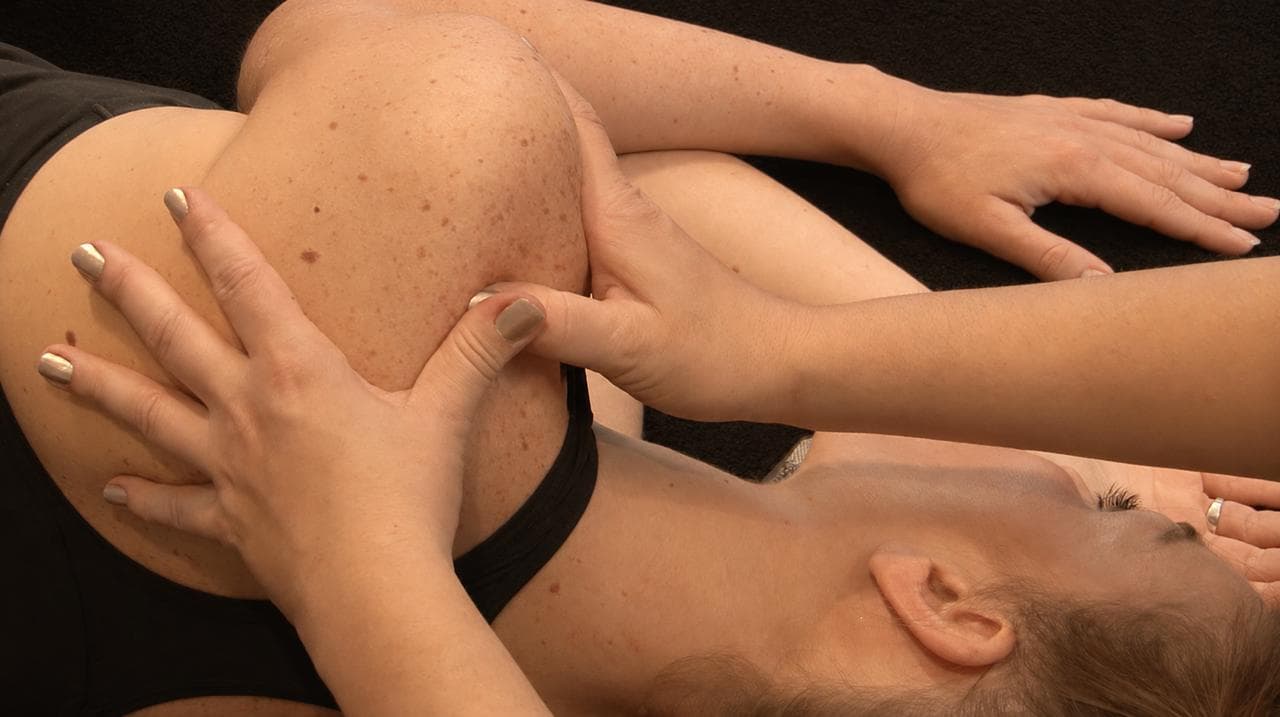
Amma combines several body techniques similar to shiatsu massage: pressure, percussion, vibration, tapping, stroking.
The practitioner performs a precise sequence called "Kata" in Japanese.
Literally, a KATA is a series of structured actions that are also found in the practice of many martial arts, such as Aikido, Kuydo, etc.
Amma must consist of a series of about twenty skillful movements with relaxing and re-energizing properties, in order to obtain a visible result on the body.
The seated massage protocol we offer is very comprehensive and lasts approximately 45 minutes in total.
It will allow you to offer your clients all kinds of express amma sessions and to adapt to the needs of customers in spas, institutes, companies or at outdoor events, in order to introduce them to the benefits of Japanese massages.
Amma stimulates the acupuncture meridians, activates the circulation of energy in the body, provides vitality and an immediate feeling of well-being.
A person receiving an Amma session remains clothed and sits comfortably in an ergonomic chair.
With the torso supported, the head is supported in a headrest similar to those found on massage tables, the legs rest on a leg rest and the arms must rest on a suitable support on the front of the chair.
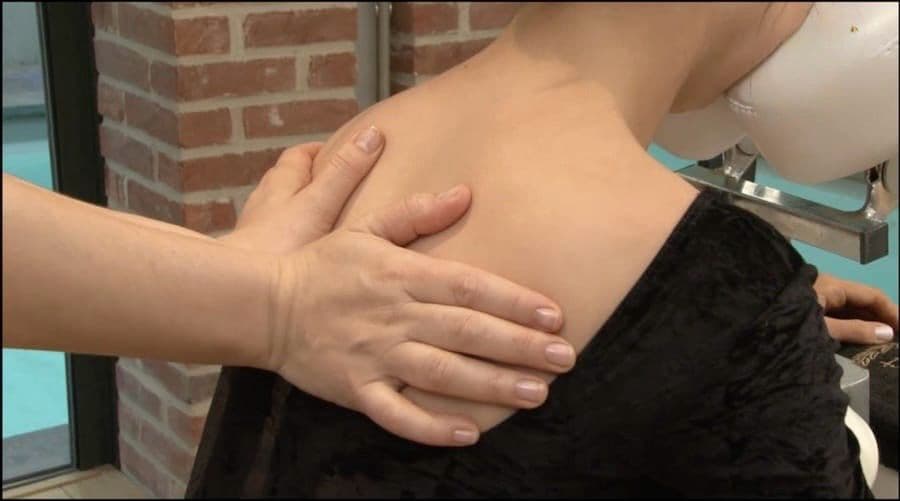
Amma massage is performed on the back, hips, neck, arms, hands, and head. The masseur will move around the client's chair, following their kata (a specific movement pattern), to perform the massage sequence.
In addition to its beneficial effects on energy circulation, seated Amma massage provides a state of deep relaxation and well-being from just 15 minutes of massage.
It is considered to be remarkably efficient in a minimum amount of time.
Amma perfectly meets the living conditions of the 21st century and the needs of the stressed and busy modern man.
Amma also makes massage accessible to a wide audience for two reasons:
Firstly, because it does not require undressing, thus saving time and also making it possible to reach a wider clientele, due to the absence of nudity.
Secondly, because it can be practiced in many places and does not require a special structure (treatment room, etc.).
Amma has many positive effects on the body and mind; it contributes to improving our quality of life.
Stress, pollution, an unbalanced diet, a lack of physical exercise and tactile contact, existential and material problems, are all factors that disrupt our physical and mental balance.
It is a pleasant method that can be used preventively for people with a dynamic lifestyle, but also for people with a more passive lifestyle imposed by age or other circumstances.
Amma in the workplace reduces stress levels and helps channel energies useful for creativity and performance for all staff.
The observed results include a reduction in absenteeism and improved productivity. Employees report feeling more motivated because they are individually recognized.
The introduction of Amma massage in the workplace has been very successful for about twelve years, as have personal development workshops. However, Amma massage has two major advantages: minimal investment for maximum relaxation in a very short time. It fosters collective and individual growth day after day.
In practice, seated Amma promotes greater energy circulation, contributes to stress resistance, soothes and calms, promotes restful sleep, leads to better elimination of toxins, relieves pain, reduces muscle tension, awakens the sense of touch, increases awareness of one's body and emotions, and increases self-esteem.
Traditionally, a pot of boiling green tea is prepared and will infuse during the massage.
This will allow you to share a cup of warm tea with the person receiving the massage at the end of the treatment.